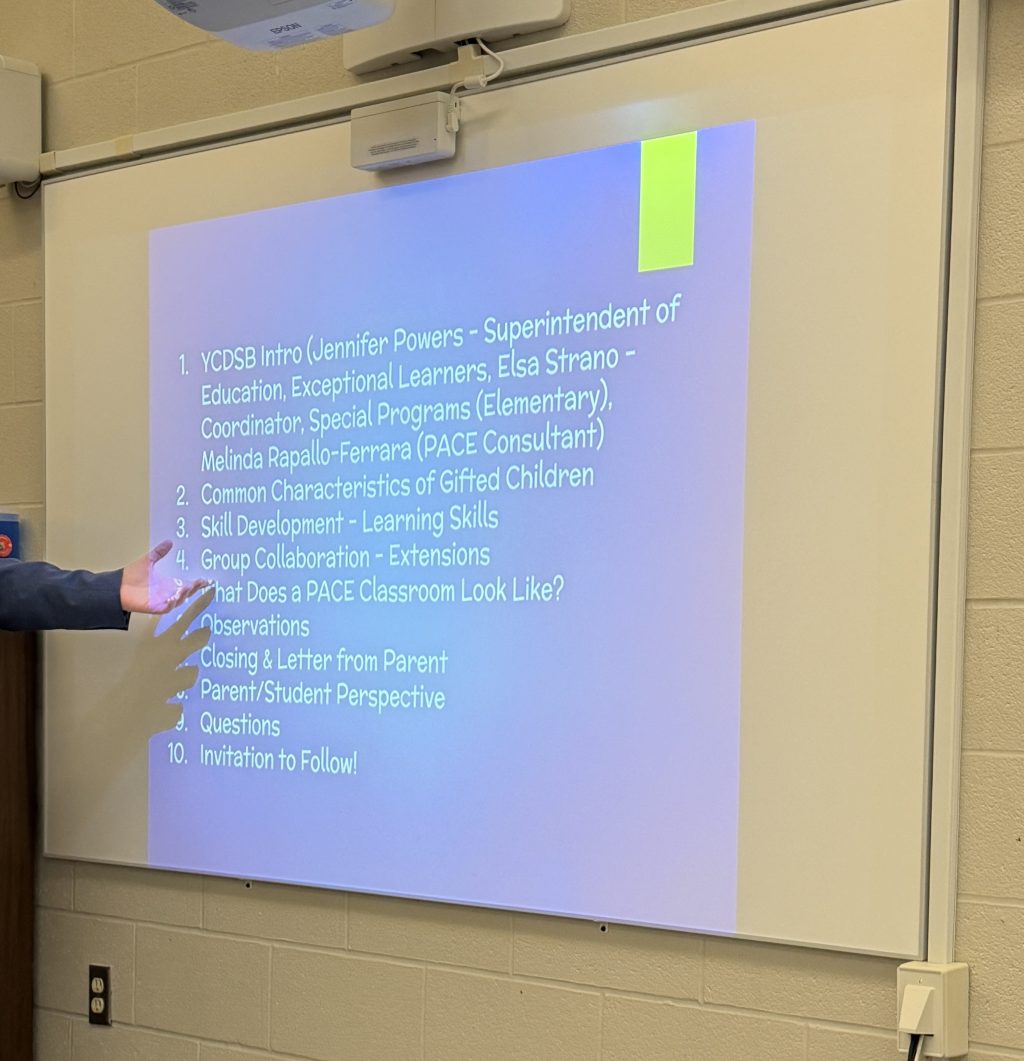
Recently, I attended a PACE (Program for Academic and Creative Extension) Information Night hosted by the York Catholic District School Board (YCDSB). As a parent in Markham, I wanted to better understand how the board supports students who benefit from additional academic challenges.
Many families in Markham, Richmond Hill, and Vaughan have questions about the YCDSB PACE gifted program, including how students are identified, what learning looks like in the classroom, and whether the program may be a good fit for their child.
This article summarizes key information shared during the information session and may help parents exploring gifted education opportunities within YCDSB.
What Is the YCDSB PACE Program?
PACE stands for Program for Academic and Creative Extension.
It is a specialized program designed for students who have been identified as gifted through the Identification, Placement and Review Committee (IPRC) process.
The program focuses on:
- deeper academic exploration
- inquiry-based learning
- creative and critical thinking
- real-world problem solving
- collaboration and independent learning
A common misconception is that the program simply accelerates students through the curriculum. In reality, the focus is depth rather than speed.
Students participating in the program receive an Individual Education Plan (IEP) that supports their learning needs.
Identification and Assessment
Students may be considered for the gifted program through psychoeducational assessments.
One indicator sometimes considered is the General Ability Index (GAI) score.
If a student meets the criteria, the IPRC process may formally identify the student as gifted and determine the appropriate educational placement.
Placement options may include:
- a PACE classroom placement
- a regular classroom with indirect support
Parents are involved throughout the identification and placement process.
Common Characteristics of Gifted Children
During the session, educators discussed some characteristics often seen in gifted learners.
These may include:
- strong academic ability or excellence
- acquiring concepts quickly
- curiosity and desire to explore topics deeply
- strong interest in particular subjects
However, gifted learners may also experience challenges such as:
- anxiety
- perfectionism
- procrastination
- being highly organized in some areas but disorganized in others
Helping students develop resilience, organization, and time-management skills is an important part of the program.
What Learning Looks Like in a PACE Classroom
The biggest difference between a regular classroom and a PACE classroom is how deeply topics are explored.
Students are not fast-tracked through the curriculum, and they do not necessarily receive more homework.
Instead, teachers focus on enrichment and deeper exploration of concepts.
Learning activities may include:
- robotics and technology challenges
- 3D printing design projects
- science fair investigations
- real-world topics such as taxation
- hands-on projects involving measurement, design, and planning
These types of projects allow students to apply their learning in ways that may not always be possible in a regular classroom.
Robotics and STEM Learning
During the information night, the presenters also showcased some of the STEM tools used in classroom activities, including VEX Robotics kits and LEGO SPIKE Prime robotics systems.
These platforms allow students to build and program robots while learning concepts related to:
- engineering design
- coding and programming
- robotics and automation
- problem solving and teamwork
Students may use robotics kits to participate in technology challenges and collaborative projects that connect science, mathematics, and engineering concepts to real-world applications.
Hands-on STEM activities such as robotics projects demonstrate how the PACE program encourages students to experiment, design, and innovate rather than simply learning concepts from textbooks.
Example of robotics equipment showcased during the information session.
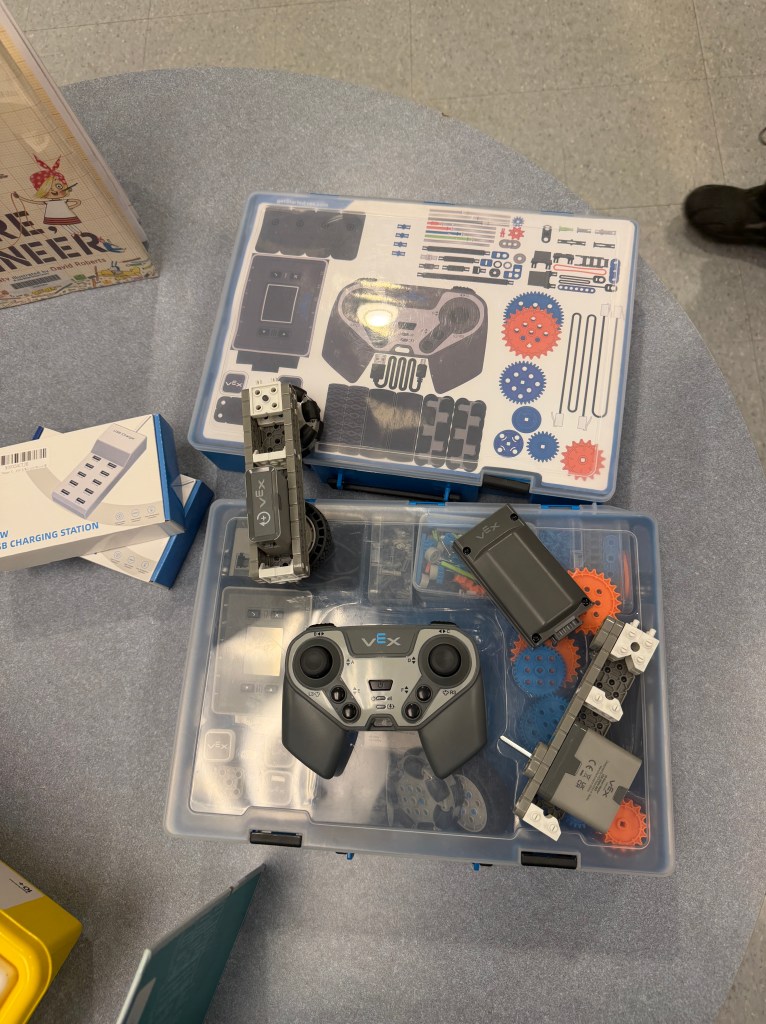
(Photo: VEX robotics kit and controller used for hands-on robotics learning.)
Smaller Class Sizes
Class size is another key difference.
A regular classroom may have around 30 students, while a PACE class may have around 13–25 students, with the program typically capped at approximately 25 students.
Smaller classes allow teachers to provide more individualized attention and create an environment where students can explore ideas more deeply.
Collaboration with STREAM Centres
PACE classes may collaborate with STREAM centres (Science, Technology, Religion, Engineering, Arts, Mathematics).
Students may participate in activities such as:
- robotics challenges
- engineering design projects
- hands-on technology exploration
- innovation and maker activities
Students may also visit STREAM centres to work with specialized equipment and tools.
Academic Enrichment Opportunities
Students in the program may participate in a variety of academic competitions and enrichment activities, including:
- mathematics contests
- computing competitions such as the Beaver Computing Challenge
- geography competitions
- environmental learning connected with organizations such as Habitat initiatives
These activities help students explore their interests and connect with peers who enjoy similar academic challenges.
PACE Students Remain Part of the School Community
Although PACE provides specialized academic programming, students are not isolated from the rest of the school community.
They continue to participate in:
- school clubs and activities
- sports teams
- school events
One example shared during the session was a school offering more than 20 clubs, including activities such as a chess club.
This allows students to maintain friendships and remain fully involved in school life.
Transitioning to a PACE Centre School
For some students, entering the PACE program may involve moving to a PACE centre school.
For example, St. Gregory the Great will host a PACE centre beginning in September 2026.
Changing schools can be a difficult decision for students who may not want to leave their current school or friends. However, educators shared that many students who were initially hesitant adapt quickly and thrive in the new environment.
Parents were encouraged to support their children through this transition and help them build resilience.
Sibling Considerations
Some parents asked whether siblings of a PACE student could attend the same school.
During the information session, it was explained that siblings may apply to attend the same school through a school transfer request (for example, the TCF-19 form).
Approval is not guaranteed and depends on factors such as available space at the school.
Families should also be aware that transportation is typically not guaranteed for siblings who transfer through this process, and parents may need to arrange transportation themselves.
Parents interested in this option are encouraged to speak with their school or the school board to understand the process and requirements.
French Immersion Considerations
Families whose children are currently in French Immersion (FI) may need to consider how entering the PACE program could affect their language pathway.
Changing programs may involve leaving the immersion stream or changing schools. Parents are encouraged to speak with their school to understand the implications before making a decision.
Transportation and Practical Information
Parents were reminded that transportation details are typically confirmed shortly before the school year begins.
Families may need to contact the school secretary during the last week of August to confirm the bus pickup intersection.
Trying the Program
One reassuring point mentioned during the session is that families may have an opportunity to try the program before making a final long-term decision.
If the program does not feel like the right fit, there may be options to return to the previous pathway.
Parent Perspective: Why the Program Can Be Helpful
Feedback shared during the information night suggested that the program can be especially helpful for students who previously felt that schoolwork was too easy or not sufficiently challenging.
In some cases, students who had extra time during the school day or felt bored academically became more engaged when learning became deeper and more challenging.
Smaller classes and inquiry-based projects can help create an environment where students feel both challenged and supported.
My Personal Takeaway as a Parent
As a parent, attending the information night helped me better understand how the school board supports students who benefit from additional academic challenges.
What stood out most was the focus on:
- deeper learning
- real-world projects
- development of important learning skills
- maintaining a supportive school environment
It was also encouraging to see that students in the program remain connected to the broader school community while having opportunities to explore their interests more deeply.
Frequently Asked Questions About the YCDSB PACE Program
What grade does the PACE program start?
The PACE program typically begins in Grade 5 and continues through Grade 8.
Is PACE the same as skipping grades?
No. The program focuses on enrichment and deeper learning, not simply accelerating students through the curriculum.
Will students receive more homework?
Not necessarily. The emphasis is on depth and complexity of learning, not on increasing homework.
Are PACE students isolated from other students?
No. Students remain part of the school community and participate in clubs, sports, and school activities.
What if the program is not the right fit?
Families may have time to try the program and reconsider their decision if needed.
Final Thoughts
The PACE information night provided valuable insight into how YCDSB supports students who benefit from greater academic challenge.
The program focuses on:
- deeper intellectual engagement
- inquiry-based learning
- real-world application of knowledge
- development of strong learning habits
For parents across Markham and York Region, attending information sessions like this can provide a clearer understanding of how the PACE program works and whether it may be a good fit for their child.
 Yan Zhou on Catholic Education & Advocacy
Leave a comment